




Employee spotlight - Tim Rock
by Vicki Heisser |
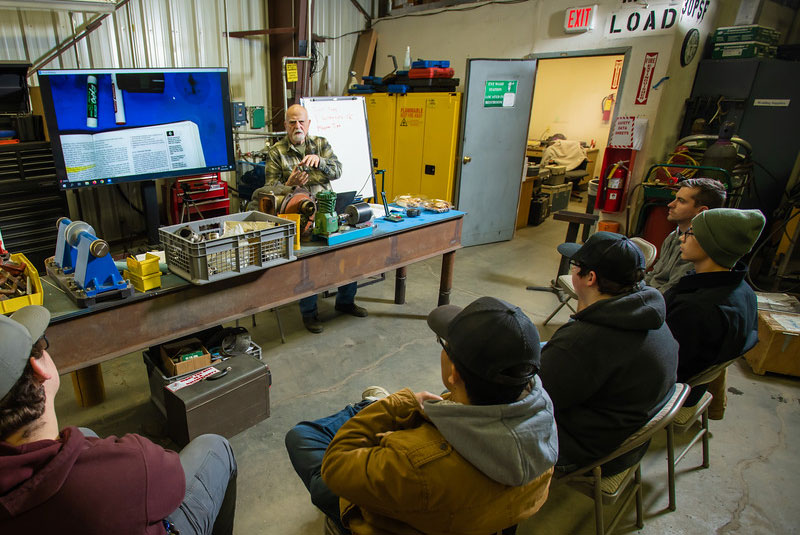
This conversation offers a closer look at the experiences, perspective, and leadership approach shaping Tim Rock, Prince William Sound College’s new Director of Career and Technical Education. With a background rooted in manufacturing, operations, and workforce development, Tim brings a blend of hands-on skill, technical expertise, and a deep commitment to people and community.
From a nomadic journey across North America to leading complex teams and strengthening operations, his path reflects both depth and practicality—qualities that align closely with the evolving needs of Career and Technical Education.
In the following Q&A, Tim shares more about his journey, what drives his approach to leadership, and the opportunities he sees in building strong programs, meaningful partnerships, and workforce pathways that serve students, industry, and communities across the region.
Please share a bit about yourself, including where you're from, hobbies, and family.
I’m originally from Richmond, Virginia, but I moved away for college and have kind
of lived a nomadic life ever since. Over the years, I’ve lived, learned, and worked
in many different places across North America, so I’m lucky to have several places
that feel like home.
My family is my wife, Linsey, and our two dogs, Mardi and Beignet, whom we call Benny.
Mardi is a mini goldendoodle, and Benny is a small rescue from western Alaska that
we adopted shortly after Typhoon Halong.
Outside of work, we really enjoy hiking and camping together. Last summer, we did
a month-long road trip from Urbanna, Virginia, to Valdez, Alaska, and stayed in eight
state, national, and provincial parks along the way.
Can you share a little about your professional background and what led you into manufacturing,
operations, and workforce development?
My professional background is really rooted in manufacturing and operations leadership.
I spent most of my career in manufacturing environments, growing from engineering
and operations roles into plant leadership positions with full responsibility for
safety, quality, delivery, people development, and financial performance. A lot of
that work involved turning around challenged operations, building stronger teams,
and putting in place better structure and processes so plants could perform at a higher
level.
What led me into manufacturing really goes back to when I was young. I never struggled
with figuring out what I wanted to do. I knew early on that I wanted to be an engineer,
but I also felt like the traditional school path was a little too cookie-cutter for
what I actually needed. In Virginia, there was a big push for what was called the
Advanced Diploma, which required, for example, three years of a foreign language.
For me, that did not feel like the best preparation for the kind of postsecondary
education and career I wanted.
At the same time, vocational and technical programs were available, but they carried
a stigma. It felt as if you chose that path instead of the advanced diploma; people
assumed college was off the table. I trusted my gut, and thankfully, my parents supported
me and let me make my own decisions. I graduated with a “regular” diploma, but I also
completed two years of Automotive Technology classes and internships. Through that,
I learned to weld, troubleshoot mechanical and electrical issues, machine rotors,
and acquire many other hands-on skills. Honestly, those two years prepared me for
studying engineering and for working as a Manufacturing Engineer more than anything
else up to that point in my education. And even now, twenty years later, I still joke
that it at least saved me from paying someone else to change my oil.
That experience really shaped how I think about work. I’ve always liked work that
is tangible and problem-solving oriented. I enjoy environments where you can see the
direct impact of good leadership, strong systems, and teamwork. Manufacturing gave
me that opportunity because it blends technical problem-solving with people leadership,
which has always been a strong fit for me.
Over time, one of the parts of the job I found most rewarding was developing people,
helping employees grow, coaching leaders, and building stronger teams. That naturally
sparked my interest in workforce development. After years in operations, moving into
workforce development felt like a natural extension of what I had already been doing.
Now I get to focus on helping people build skills, enter meaningful careers, and meet
workforce needs at the same time.
What’s your leadership style when it comes to building teams in technical or hands-on
environments?
I’d say servant leadership is probably the closest label, but honestly, I think leadership
style is always evolving. It’s really the result of your experiences, your strengths,
and the work you put into improving the areas where you know you need to grow. If
I had to describe my leadership style today, I’d call it tough, curious, and compassionate.
When I say tough, I don’t mean being harsh. I mean, having high standards for myself
and for the team. I believe strong teams are built through clear plans, clear communication,
and accountability. At the end of the day, we need to do what we said we would do.
Curiosity is a big part of how I lead, too. I ask a lot of questions, and I tend to
be very data-driven in decision-making. That probably comes from being an engineer.
Structure, logic, and objective analysis are naturally how I think. But I also believe
data is only one part of the picture. I really value hearing from the people doing
the work, getting their feedback, and understanding their ideas. That leads to better
decisions and helps build stronger teams because people want to know their perspectives
matter.
The compassionate side of my leadership really comes from the environments I’ve worked
in. I’ve stepped into some challenging plants that were underperforming and needed
to improve quickly. In those situations, I found that the workforce was rarely the
problem. Most of the time, people worked hard and did the best they could with the
resources and direction they had. The real gaps were often in leadership, structure,
or support.
That shaped me a lot because when you’re leading a site with 100 to 300 employees,
you’re not just making decisions that affect a business. You’re making decisions that
affect 100 to 300 families. That gives you a real sense of responsibility. It pushes
you to make decisions that are not only effective but fair and grounded in what is
best for your people.
So overall, I try to lead in a way that sets high expectations, stays open and curious,
and never loses sight of the human side of the work. I’ve found that when people trust
their leadership, feel heard, and know what success looks like, they gain the confidence
to do great work.
As you step into the CTE Director role, what are you most excited to work on or build
here?
I’m most excited about the chance to help build programs that really make a difference
for students, employers, and the community. Right now, that starts with listening.
I’ve only been here a few days, so I want to learn from the faculty, staff, and partners
who know this space well and understand the real needs and opportunities.
At the same time, I do believe there are some principles that should guide the work.
Programs need to be fiscally sound, sustainable, and scalable. Because CTE is supported
by public funding and industry investment, we have a responsibility to use those resources
wisely and in a way that supports the college’s mission. I’m excited about building
programs that can stay strong during slower periods and scale quickly when industry
demand increases.
What does a strong partnership with faculty, staff, and industry look like to you
in practice?
A strong partnership with faculty, staff, and industry starts with alignment. I think
of it a lot like a marathon. In a successful marathon, everyone understands the course,
knows where the finish line is, and has support stations along the way to help them
perform at their best. But when communication breaks down, and people are unclear
on the destination, you end up with a lot of hardworking people running full speed
in different directions. Some may still find success, but the organization as a whole
becomes fragmented and less effective.
That happens in industry all the time. You can have talented, committed people working
incredibly hard, but if faculty, staff, and industry partners are not aligned on the
same goals, everyone ends up carrying their own piece of the mission instead of moving
forward together.
In practice, a strong partnership means all three groups are actively shaping the
same outcome. In Career and Technical Education, especially in Alaska, that outcome
is clear: we are building a pipeline for education, workforce training, and community
development so that remote communities can grow their own talent rather than constantly
relying on importing workers or sending residents away for training, only to hope
they come back.
To make that real, the partnership has to be ongoing and intentional. Faculty bring
expertise in instruction and student development. Staff create the systems, support,
and infrastructure that allow programs to run well. Industry brings current expectations,
workforce needs, and real-world accountability. When those three groups are working
together consistently, you get programs that are relevant, responsive, and sustainable.
Advisory committees are a big part of that. They should do more than meet once or
twice a year to check a box. They should help set direction, validate curriculum,
identify upcoming workforce needs, and ensure our labs, equipment, and instructional
materials reflect the realities students will face on the job. Industry expectations
continue to rise, so strong partnerships do not just react to change; they anticipate
it. They help us prepare students to leave with the confidence, technical ability,
and professionalism to succeed immediately in the workforce.
To me, that is what a strong partnership looks like in practice: shared goals, clear
communication, mutual accountability, and a commitment to preparing students for real
opportunities in the communities we serve.